If you have ever applied for a personal loan, car financing, or even a mobile phone on installment in Malaysia, you may have heard the terms CCRIS or CTOS. Some bank officers might have told you that your application was declined due to your CCRIS record. Others may have mentioned your CTOS score as a factor in their decision. But what do these terms actually mean? And more importantly, how can you understand and improve your own credit standing?
In Malaysia’s financial system, CCRIS and CTOS are not mysterious blacklists. They are tools used by lenders to assess your reliability as a borrower. Knowing how they work gives you control over your financial future. It allows you to prepare before applying for credit, correct errors if they exist, and build a stronger financial identity over time.
What Is CCRIS
CCRIS stands for the Central Credit Reference Information System. It is a national credit reporting system managed by Bank Negara Malaysia. Every licensed bank, finance company, and approved lender in Malaysia is required to report your borrowing and repayment activity to CCRIS. This includes personal loans, credit cards, hire purchase loans, housing loans, and even PTPTN education loans.
The purpose of CCRIS is not to punish borrowers but to provide a factual, up-to-date record of how individuals and businesses manage credit. When you apply for a new loan, the lender will request your CCRIS report to evaluate your past behaviour. Have you paid on time? Do you carry high balances? Have you defaulted or restructured a loan? These questions are answered through your CCRIS file.
Unlike private credit reports, CCRIS does not assign a numerical score. Instead, it presents raw data - your outstanding debts, payment history over the last twelve months, legal actions, and any accounts under special monitoring. This transparency allows lenders to make informed decisions based on actual patterns, not assumptions.
How to Access Your CCRIS Report
You have the legal right to view your own CCRIS report, and the process is free of charge. The easiest way is through the eCCRIS online portal operated by Bank Negara Malaysia.
To register, visit eccris.bnm.gov.my and follow the steps to create an account using your MyKad number and a valid email address. You will complete a one-ringgit verification transaction, which is automatically refunded within two working days. Once registered, you will receive a one-time password to log in and download your full credit report instantly.
If you do not have internet banking, you can also obtain your CCRIS report in person at any Agensi Kaunseling dan Pengurusan Kredit (AKPK) branch. Simply bring your MyKad, verify your identity at the kiosk, and print your report on the spot. Alternatively, you can submit a written request via post or email to Bank Negara’s TELELINK service, though this method takes longer.
Reviewing your CCRIS report at least once a year is a smart financial habit. It is especially important before applying for major financing such as a home or car loan. This gives you time to address any inaccuracies or improve your repayment record before submitting your application.
How to Read Your CCRIS Report
Your CCRIS report is divided into three main sections. Understanding each part helps you see what lenders see when they review your file.
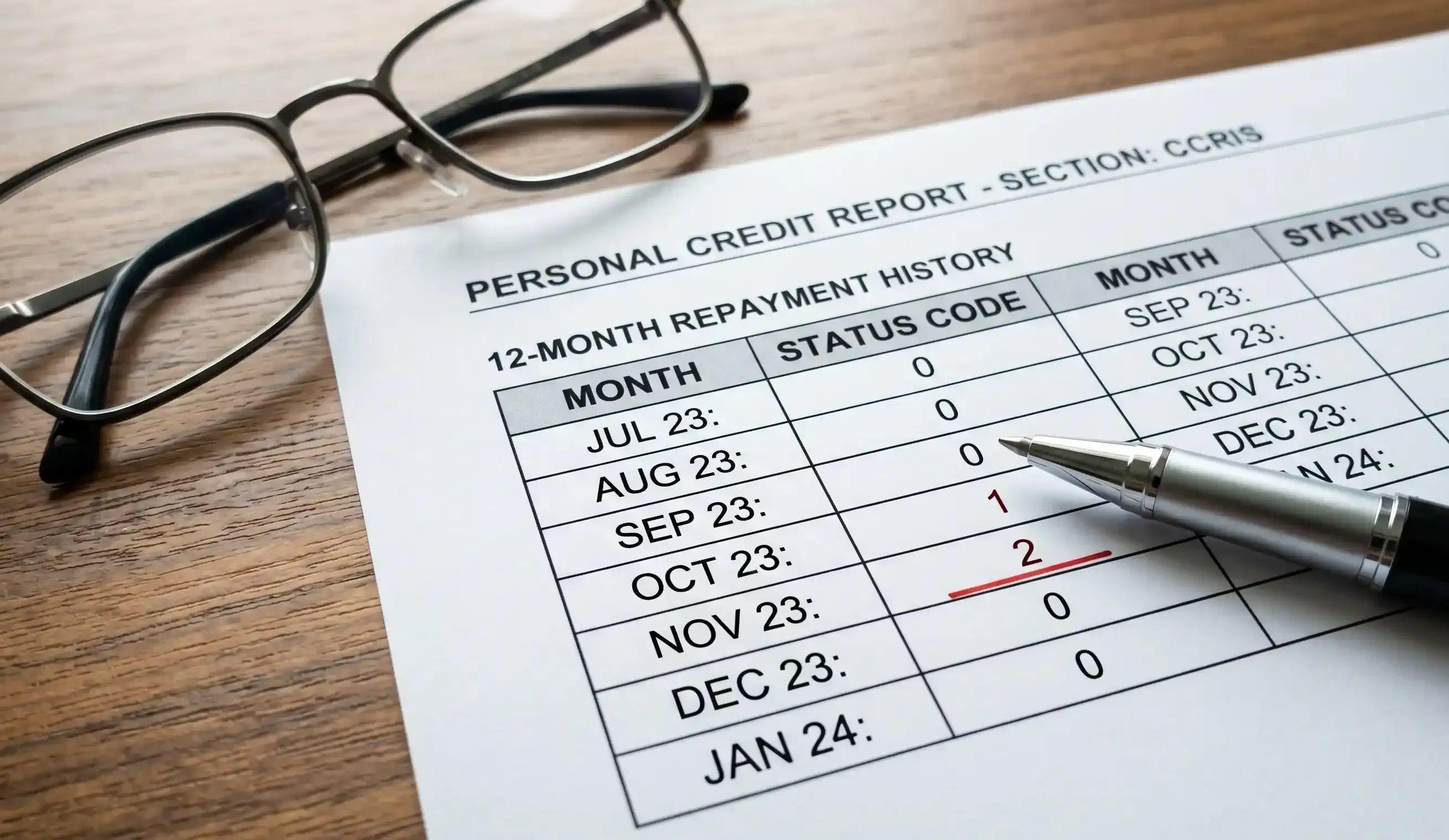
The first section is Outstanding Credit. This lists all active credit facilities under your name, including joint accounts or business-related loans. For each account, you will see the lender, type of facility, original amount, current outstanding balance, credit limit, and monthly installment. Most importantly, it shows your payment behaviour over the past twelve months using a simple numbering system. A zero means no late payments. One means one month in arrears, two means two months, and so on. Consistent zeros reflect strong reliability, while repeated numbers indicate potential risk.
The second section is Special Attention Accounts. These are loans that financial institutions are closely monitoring, often because payments have been missed for more than three months or the account has been restructured. Being listed here does not mean you are blacklisted, but it does signal financial stress. Lenders will view this as a red flag and may require additional documentation or impose stricter terms.
The third section is Applications for Credit. This shows all credit applications you have made in the last twelve months, along with their status - approved, pending, or rejected. Multiple recent applications can suggest financial pressure, even if you were simply comparing offers. It is better to research lenders thoroughly before applying to avoid unnecessary inquiries on your report.
What Is CTOS
CTOS is a private credit reporting agency licensed by Bank Negara Malaysia under the Credit Reporting Agencies Act 2010. Unlike CCRIS, which focuses only on financial institutions, CTOS gathers data from a wider range of sources. This includes court records, bankruptcy filings, Companies Commission of Malaysia registrations, utility bills, telecommunications providers, and even non-bank lenders like licensed moneylenders.
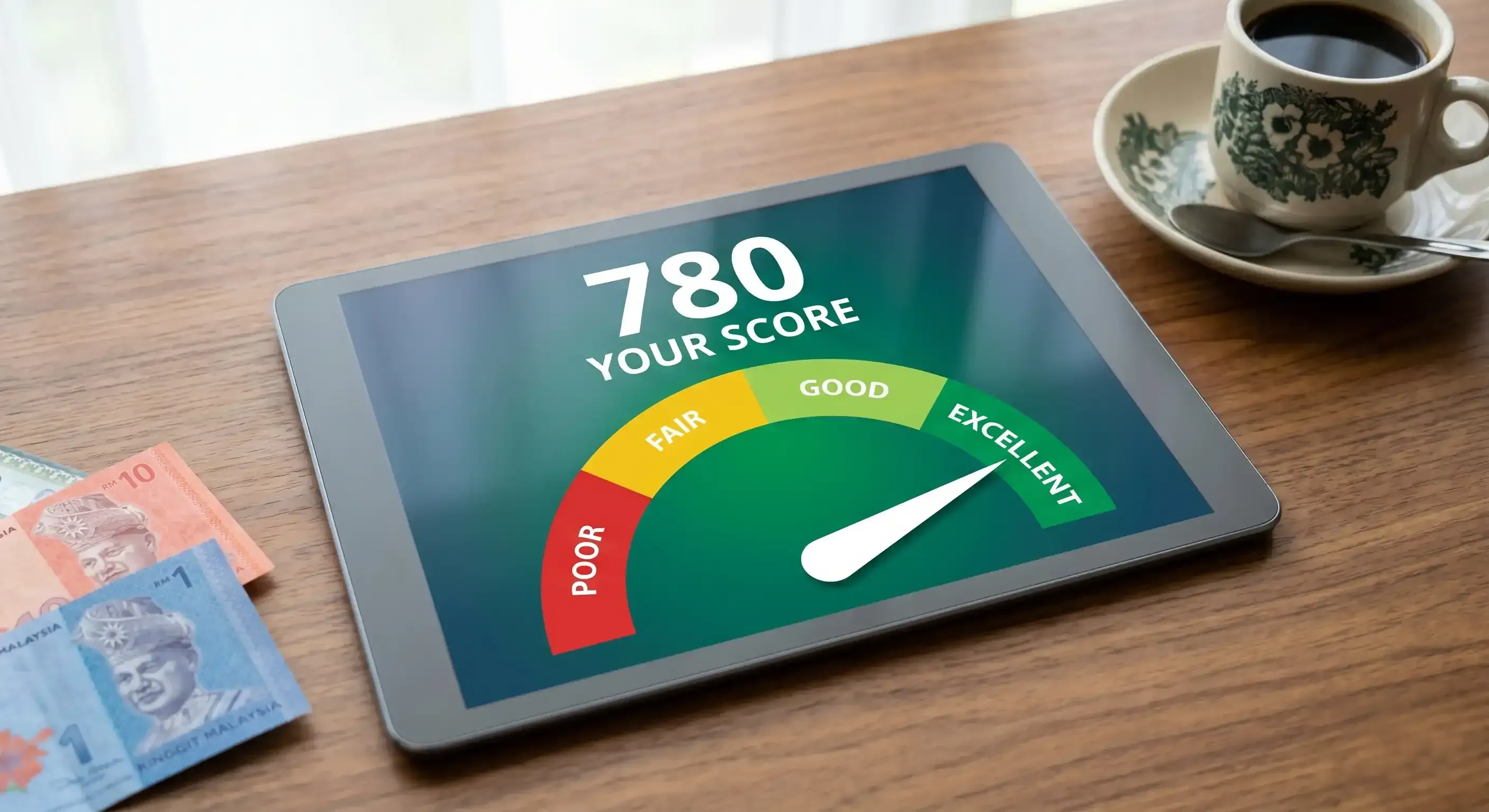
One key difference is that CTOS provides a credit score - a three-digit number ranging from three hundred to eight hundred fifty. A higher score indicates lower credit risk. This score is calculated based on your payment history, debt levels, length of credit history, types of credit used, and recent applications.
CTOS reports also include information about your business ownership, legal cases, and directorships. This makes them particularly useful for assessing entrepreneurs or individuals with complex financial profiles. While banks primarily rely on CCRIS, many also check CTOS to get a fuller picture of your financial behaviour.
You can access your basic CTOS report for free through the official CTOS website or mobile app. After registering with your MyKad and completing identity verification, you can view your credit summary instantly. A paid version, called the MyCTOS Score Report, includes your full credit score, CCRIS data, and detailed risk assessment for a small fee.
Why Both CCRIS and CTOS Matter
While CCRIS is the official government-backed system, CTOS offers complementary insights. Together, they form a comprehensive view of your creditworthiness in Malaysia.
A strong CCRIS record shows consistent repayment to banks and formal lenders. A good CTOS score reflects responsible management of broader financial obligations, including utilities and telco bills. Lenders use both systems to calculate your Debt Service Ratio (DSR) - the percentage of your income that goes toward debt repayments. If this ratio exceeds sixty percent, your loan application may be rejected or approved for a lower amount.
It is important to note that neither CCRIS nor CTOS “blacklists” anyone. They simply report facts. A poor record is not permanent. With disciplined repayment and time, you can rebuild your standing.
Common Misconceptions About Credit Reports
Many Malaysians believe that having no debt means having a perfect credit record. In reality, a blank CCRIS file can be just as problematic as a negative one. Lenders prefer to see evidence of responsible credit use. If you have never taken a loan or credit card, they have no data to assess your reliability.
Another myth is that checking your own report harms your credit. This is false. Only “hard inquiries” made by lenders when you apply for credit appear on your file. Personal checks are considered “soft inquiries” and have no impact.
Some also assume that settling a debt removes it from their report immediately. However, repayment history remains visible for twelve months. The key is consistency - making every payment on time, every month, without exception.
How to Improve Your Credit Standing
Improving your CCRIS and CTOS records starts with awareness and action. First, obtain your reports and review them carefully. If you find errors - such as a loan you never took or a payment marked late when it was on time - file a dispute with the relevant agency immediately. Provide supporting documents like bank statements or payment confirmations.
Next, focus on timely repayments. Set up automatic transfers or calendar reminders to avoid missing due dates. Even a single late payment can affect your record for a full year.
Reduce your credit utilisation where possible. If you have a five thousand ringgit credit card limit, try to keep your balance below one thousand five hundred ringgit. High utilisation suggests financial strain, even if you pay on time.
Avoid applying for multiple loans or credit cards in a short period. Each application adds a hard inquiry, which can lower your perceived stability.
Finally, be patient. Positive changes take time to reflect. It may take three to six months to see noticeable improvement, but with consistent effort, your credit profile will strengthen.
Your Credit Report Is Your Financial Identity
In Malaysia’s modern economy, your CCRIS and CTOS records are more than just files - they are your financial identity. They influence not only loan approvals but also rental agreements, mobile contracts, and even insurance premiums.
But unlike a fixed document, your credit report evolves with your choices. You do not need to be perfect. You just need to be consistent. Pay on time, borrow responsibly, and review your file regularly. These simple actions build trust and open doors to better opportunities.
The best part is that you are already in control. Your credit report reflects your past, but it also responds to your present. And that means your next financial decision can be your strongest one yet.
Take a few minutes this week to log in to eCCRIS or CTOS. Read your report carefully. Understand where you stand. Then, if needed, take one small step toward improvement. That single action could open doors you did not even know were closed. Because in the end, your credit report is not just about loans. It is about opportunity, trust, and the freedom to build the life you want in Malaysia.
Legal Notice
The contents of this publication are for reference purposes only and may not be current as at the date of accessing this publication. We do not take responsibility for the accuracy of its contents. They do not constitute legal advice and should not be relied upon as such. Specific legal advice about your specific circumstances should always be sought separately before taking any action based on this publication.