Quick answer:
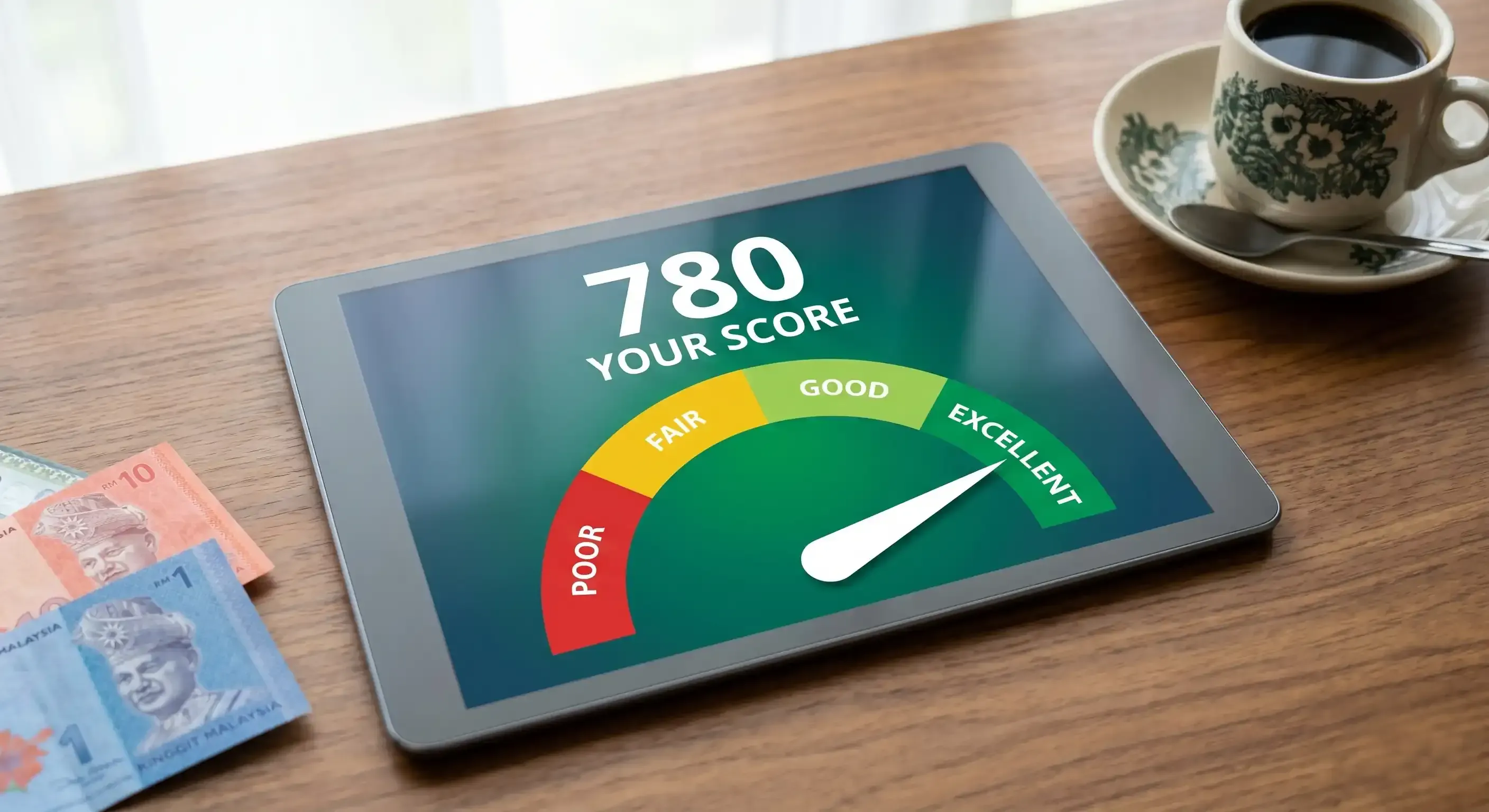
In Malaysia, most lenders read your CTOS Score, which runs from 300 to 850. A score of 697 and above is considered good, 744 and above is excellent, and anything below 651 is treated as weak — it makes approval harder and pricing more expensive. The average CTOS Score among credit-active Malaysians was 622 in 2025, so a score in the high 600s already puts you ahead of most borrowers.
CCRIS vs CTOS: Two Different Things
Before talking about ranges, it helps to know where the number actually comes from. This is the single most misunderstood part of credit in Malaysia.
- CCRIS (Central Credit Reference Information System) is run by Bank Negara Malaysia. It is a report, not a score. It shows your outstanding credit facilities, your repayment conduct for the last 12 months, special attention accounts, and every credit application you made in the past 12 months. Banks read it on every application. CCRIS gives you no score at all.
- CTOS, Experian and CRIF are private credit reporting agencies (CRAs) registered with the Ministry of Finance under the Credit Reporting Agencies Act 2010. They pull CCRIS data, add court and bankruptcy records, trade references and other sources, and turn it into a score — the CTOS Score, Experian’s i-SCORE, and so on.
So there is no single “Malaysian credit score”. Your CTOS Score and your Experian score can differ, because they use different data and different models. CTOS is the one most Malaysian banks quote.
Understanding the CTOS Score Range
The CTOS Score runs from 300 to 850 and is split into six bands:
- Poor (300–528): Serious repayment problems, defaults, or legal records. Approval for mainstream bank credit is unlikely.
- Low (529–650): Below-average credit health. Expect rejections, or much tighter terms from banks.
- Fair (651–696): A mixed record. You will get credit, but not the best pricing or limits.
- Good (697–717): Consistent repayment behaviour and manageable exposure. Comfortable approval for most products.
- Very Good (718–743): A strong profile. Better rates, higher limits, faster approvals.
- Excellent (744–850): Top tier. The best available pricing and the widest choice of products.
In terms of distribution, CTOS data on credit-active Malaysians puts roughly 10% in Excellent, 23% in Very Good, 22% in Good, 18% in Fair, 19% in Low and 8% in Poor. The average score is 622 and the median 637 — both of which sit in the Low band, which tells you how much room most Malaysians still have to improve.
One caveat: Experian Malaysia and CRIF also use a 300 to 850 scale, but their cut-offs and models are their own. Do not compare a CTOS number directly against an Experian one.
What Makes a Credit Score Good?
A CTOS Score of 697 or higher is what lenders treat as good. It signals steady, on-time repayment across your facilities and no adverse legal records.
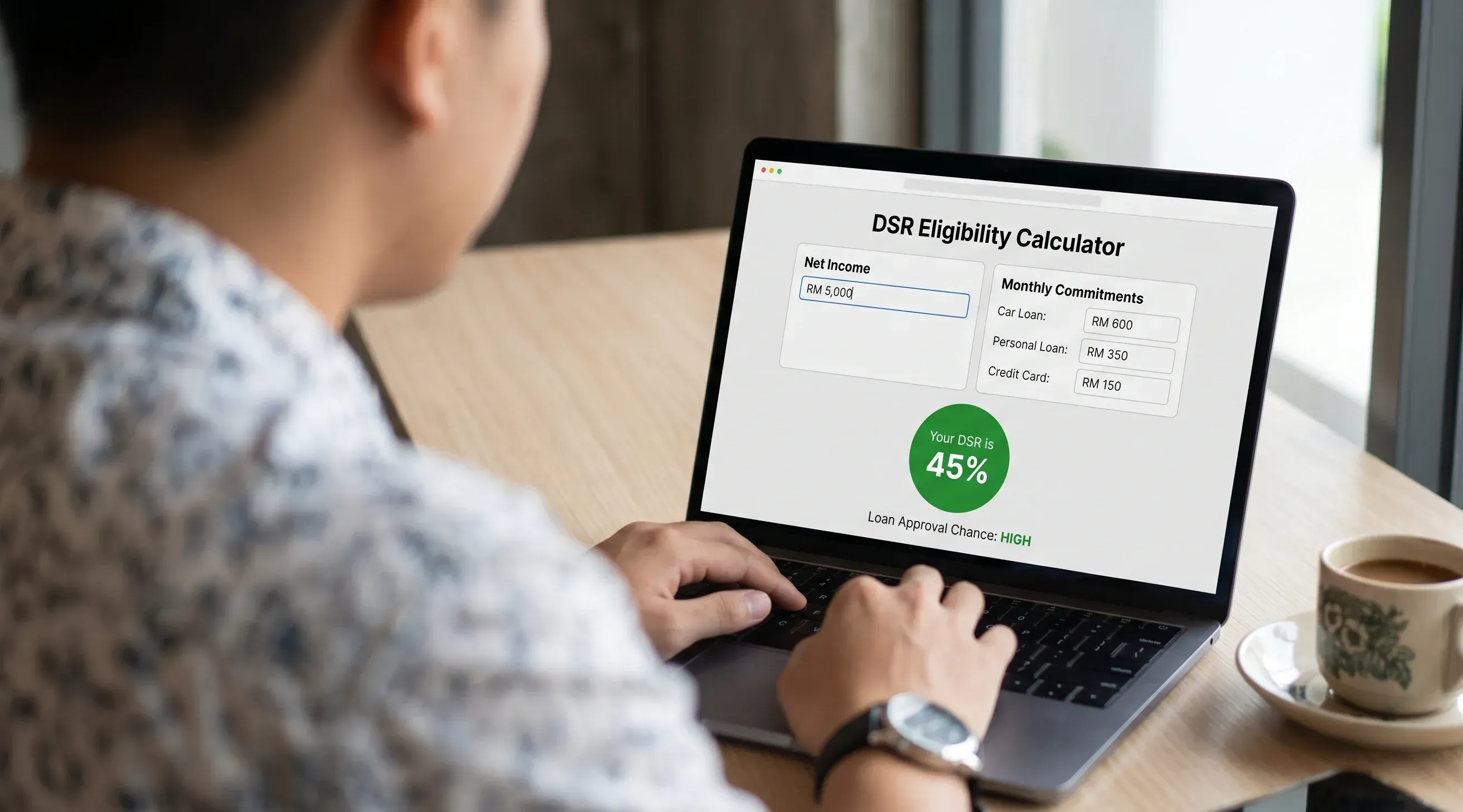
But in Malaysia the score is only half the decision. Banks also apply their own credit policy and, crucially, your Debt Service Ratio (DSR) — the share of your monthly income already committed to debt repayments. Most banks want DSR below roughly 60%, and they are stricter with lower income bands. A borrower with an excellent score and a 75% DSR can still be declined, while a borrower with a fair score and a low DSR is often approved.
On a home loan, a good score usually earns you a thinner spread over the Standardised Base Rate (SBR), which is what decides how much you actually pay. It also helps with credit card limits, hire purchase approval, and how quickly your application moves.
Factors That Affect Your Credit Score
CTOS does not publish fixed percentage weightings for its score. The familiar 35% / 30% / 15% / 10% / 10% split comes from the US FICO model and does not describe how scoring works in Malaysia. What the agencies do say they look at:
- Repayment behaviour: The biggest driver. CCRIS shows your last 12 months of conduct on every facility, so even one or two months in arrears is visible to every bank you apply to.
- Outstanding credit and utilisation: How much you owe against your available limits. Persistently maxed-out cards read as financial stress.
- Length of credit history: A long, clean track record scores better than a thin file. Having no credit at all is not the same as having good credit — with no history, there is nothing to score.
- Credit mix: A sensible spread of facility types (card, home financing, hire purchase) reads better than several revolving lines alone.
- New applications: CCRIS lists every application from the last 12 months, approved or not. A cluster of applications in a short window looks like distress.
- Legal and bankruptcy records: Particular to Malaysia, and often decisive. Court cases, judgments, winding-up notices and bankruptcy status from Malaysian Department of Insolvency appear in your CTOS report and can block an application regardless of your score.
How to Improve Your Credit Score
Improving your credit standing takes time and discipline, but it is entirely achievable. Here are the steps that actually move the needle in Malaysia:
- Pay on time, every month. CCRIS rolls 12 months of conduct, so one clean year genuinely changes your profile. Set standing instructions or auto-debit so nothing slips. Note that ordinary utility and telco bills are not reported to CCRIS — but if one ends up in court or collections, it can surface in your CTOS report.
- Bring down card balances. Keeping utilisation low, commonly under 30% of your limit, helps both your score and your DSR. Remember BNM’s rules: the minimum income for a principal credit card is RM24,000 a year, and if you earn RM36,000 a year or less you may hold cards from a maximum of two issuers, with each limit capped at two times your monthly income.
- Manage your DSR, not just your score. Clearing or consolidating a small facility before a large application often matters more than a few score points.
- Keep older accounts open. Closing your oldest card shortens your history and cuts your total available limit, which pushes utilisation up.
- Space out applications. Every application sits in CCRIS for 12 months. Do not approach several banks in the same week; ask for an indicative assessment first.
- Settle any legal records. A settled case still shows, but “settled” reads very differently from “outstanding”. If you have been declared bankrupt, check your discharge status with the Malaysian Department of Insolvency.
- Build a file if you have none. A credit card secured against a fixed deposit, or a small facility repaid on schedule, establishes the record lenders need to see.
What Happens if Your Credit Score Is Too Low?
A score in the Low or Poor bands, below 651 and especially below 529, mainly costs you access and price. Banks will either decline you or price the risk in: a wider spread on a home loan, a higher flat rate on hire purchase, a smaller card limit or none at all. Personal financing shifts towards non-bank lenders at higher cost.
Some employers in the financial sector do run credit checks on candidates, with consent, for roles that handle money or fall under Bank Negara’s fit-and-proper requirements. Outside that sector, it is not routine practice in Malaysia.
How a Good Credit Score Helps You Financially
The clearest gain is pricing on a home loan. Malaysian home financing is quoted as SBR plus a spread, and your credit profile is one of the things that decides that spread.
Take a RM500,000 loan over 30 years. At 4.00% p.a. the installment is about RM2,387 a month and total interest is roughly RM359,000. At 4.50% it is about RM2,533 a month and roughly RM412,000 in interest — about RM146 more every month and around RM53,000 more over the life of the loan, for half a percentage point.
The same logic applies to hire purchase, personal financing and credit card rates. A strong score also means higher approved limits, faster decisions, and access to products that simply are not offered to weaker profiles. Figures above are illustrative; your actual rate depends on the bank, the product and your full profile.
Common Myths About Credit Scores
- “I’m blacklisted by CTOS.” There is no CTOS blacklist. CTOS is a reporting agency that compiles records; it does not approve or reject anyone and keeps no ban list. Lenders make the decision. What people call being blacklisted is usually poor CCRIS conduct or an outstanding legal record.
- “Checking my own score lowers it.” It does not. Pulling your own CCRIS or CTOS report is a self-check and is not treated as a lender enquiry. What counts against you is the record of actual credit applications in CCRIS.
- “Only late payments matter.” Utilisation, DSR, length of history and legal records all feed the picture.
- “Opening a new account always hurts.” A new facility managed well can lift your score by adding history and lowering overall utilisation. Several applications at once is the problem, not one well-run account.
- “No debt means a great score.” With no credit history there is little to score. Lenders cannot verify behaviour they have never seen.
- “Settling a debt wipes the record immediately.” Records update to reflect settlement, but the history stays visible for a period. Settle early rather than hoping it disappears.
How to Check Your Credit Score in Malaysia
This is where most international guides mislead Malaysian readers: TransUnion and Equifax do not operate here. The agencies that do are CTOS, Experian Malaysia and CRIF, alongside CCRIS from Bank Negara, which is free but carries no score.
- CCRIS via eCCRIS — free. Register at eccris.bnm.gov.my; identity verification is done with a RM1 transfer to a designated BNM account, which is refunded. After that you can view and download your report at any time. You can also obtain it at BNM Kuala Lumpur or the regional offices with your MyKad, or through BNM TELELINK. There is no score, but this is the exact repayment record your bank reads.
- CTOS. The MyCTOS Basic report is free but excludes your CTOS Score and CCRIS data. The MyCTOS Score Report, which includes the score together with CCRIS records, is a paid report (around RM27 at the time of writing). CTOS also offers a paid monitoring subscription.
- Experian Malaysia. A personal credit report with the i-SCORE is available for a fee, around RM24 at the time of writing.
- Your bank. Several Malaysian banks and finance apps show a credit score inside their app, so check there before paying for a report.
Check before you apply, not after you are rejected. If something is wrong, the Credit Reporting Agencies Act 2010 gives you the right to access and correct your data. Where you send the dispute matters: an error in a CRA report goes to the CRA itself (CTOS, Experian or CRIF), while an error in CCRIS has to be raised with the bank or finance company that reported it. Bank Negara does not amend the data itself; it only publishes what lenders submit. Keep your correspondence, and escalate to BNM TELELINK if the lender does not act.
Why Your Credit Score Matters
Your credit standing decides whether you get a home loan, a car or a credit card, and how much each of them costs you. On a typical home loan, the gap between a good and a mediocre profile is tens of thousands of ringgit over the term.
Treat it as routine maintenance rather than a crisis response: pull your CCRIS report a few times a year, keep repayments automatic, watch your DSR before taking on anything new, and space out your applications.
If repayments have already become unmanageable, Malaysia has a free, government-backed option: AKPK (Agensi Kaunseling dan Pengurusan Kredit), set up by Bank Negara in 2006. It provides free financial counselling and a Debt Management Programme that restructures your repayments with participating lenders. Be aware that enrolling in the programme is recorded in CCRIS and will limit new borrowing while you are in it — but for anyone genuinely behind on payments, it is far better than defaulting. AKPK charges no fees and works through no agents, so ignore anyone who asks for payment to “fix” or “clear” your CTOS record.
Legal Notice
The contents of this publication are for reference purposes only and may not be current as at the date of accessing this publication. We do not take responsibility for the accuracy of its contents. They do not constitute legal advice and should not be relied upon as such. Specific legal advice about your specific circumstances should always be sought separately before taking any action based on this publication.